Learner edition
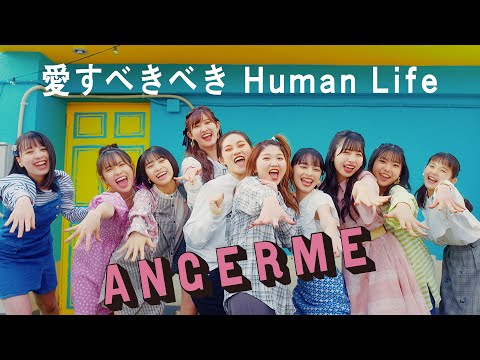
愛すべきべき Human Life Aisubekibeki Human Life
A complete learner edition with context, grammar notes, and full line-by-line analysis.
- Artist
- ANGERME
- Level
- JLPT N3-N2
- Source
- Quarto draft
Piece and context
Aisubekibeki Human Life is especially interesting for learners because the title itself is wordplay-heavy. 愛すべき can mean “lovable” or “worthy of love,” and repeating べき gives the phrase extra rhythmic force while keeping the nuance slightly unstable.
That makes the song a strong learner case because one short phrase can be unpacked in several directions. The wording sounds cheerful and slogan-like, but it still carries evaluation, encouragement, and a faint sense of “ought to.”
For learners, the key value of the page is that べき is not simply the stiff textbook “should.” In a pop refrain, it can slide between moral pressure, affectionate affirmation, slogan energy, and rhythm. This is a very good example of grammar-like material turning into style.
Learner notes
Style and register
Aisubekibeki Human Life uses upbeat, slogan-like Japanese with a lot of momentum. It is often described as a lively ska-leaning number, which helps explain why the repeated wording feels propulsive rather than heavy.
- rhythmic wordplay
- affirmative social language
- repeated hook phrases
- bright but concept-heavy pop diction
- a good example of how repetition can carry nuance rather than flatten it
- useful for studying how value-language can be made catchy
- strong contrast between cheerful sound and value-laden wording
Important grammar patterns
- 〜べき (-beki): should / ought to, but here partly stylized in the refrain
- なるべく (narubeku): as much as possible
- 〜ちゃ (-cha): contracted form, as in 押しつけちゃ
- 〜んな (-nna): rough negative imperative, as in 忘れんな
- 〜より (-yori): rather than, as in 共感より共存だ
Vocabulary and literary notes
- 愛すべき (aisubeki): lovable, worthy of love; can also carry a “should love” nuance
- Human Life: English framing that gives the song slogan energy and broad human scope
- 流行病 (hayariyamai): epidemic, here used figuratively for a fad or social contagion
- 邂逅 (kaikou): encounter, chance meeting; literary-sounding word
- 共感 / 共存 (kyoukan / kyouzon): empathy / coexistence
- useful for studying when べき sounds moralizing and when it sounds playful or affectionate
- useful for showing how repeated morphology can become hook language rather than remain purely grammatical
Text
Main hook
1
愛すべきべき Human life お先はまっキラだ [Light up!] / なるべく多くのYes 自問していきたい And you? / 愛すべきべき Human life 前途は多感だ [Feel up!] / 温もりだけ忘れんな Noである時も
Aisubeki beki human life osaki wa makkira da / narubeku ooku no yes jimon shite ikitai / aisubeki beki human life zento wa takan da / nukumori dake wasuren na no de aru toki mo
love-worthy OUGHT human life / future TOP bright / as.much.as.possible many GEN yes self-question do-go-want / future TOP sensitive / warmth only forget-NEG.IMP no COP time even
This lovable, ought-to-be-loved human life: what lies ahead is dazzling. I want to keep asking myself for as many “yes” answers as possible. This lovable human life: the future is emotionally sensitive. Just do not forget warmth, even in times of “no.”
愛すべきべき is built from a normal 愛すべき plus an extra echoed べき, which makes the phrase catchy and unstable on purpose. なるべく means “as much as possible,” and 忘れんな is a rough, upbeat way to say “don’t forget.”
2
And you? And you? And you? And you? And you? And you? / ねえねえ!
And you? ... / Nee nee!
and you / hey hey
And you? And you? And you? ... Hey, hey!
The repeated English question pulls the listener into the slogan. ねえねえ is a familiar attention-getter, light but insistent.
Social pressure block
3
とやかくいう時代だ 正論って流行病? / 正解は押しつけちゃ不正解 やりづらいでしょ 現代人 / ってことで自分ブンブン 大事にしたい いろんな異論もあるけど / スタンス 十分貫きたい まっすぐでいたい未来
Toyakaku iu jidai da seiron tte hayariyamai / seikai wa oshitsukecha fuseikai yarizurai desho gendaijin / tte koto de jibun bunbun daiji ni shitai ironna iron mo aru kedo / sutansu juubun tsuranukitai massugu de itai mirai
this.and.that say age COP / correct.theory QUOT epidemic / correct.answer TOP impose-if incorrect / hard.to.live FP modern.people / so self emphatically value-want / many objections even exist but / stance fully carry.through-want / straightforward COP want future
It’s an age when everyone has something to say. Is “being right” some kind of epidemic? If the “correct answer” gets imposed, it becomes the wrong answer. That makes life hard for modern people, doesn’t it? So because of that, I want to value myself, even though there are all kinds of objections. I want to carry my stance through properly. I want a future where I can stay straightforward.
正論 means correct theory or righteous argument. 押しつけちゃ is a contracted form of “if you force it on people.” 自分ブンブン is playful and rhythmic, more slogan-like than standard prose.
Refrain repeat
4
愛すべきべき Human life ... / 温もりだけ忘れんな Noである時も / And you? ... / ねえねえ!
Repeat refrain
repeat refrain
The main refrain returns, repeating the mix of affirmation, evaluation, and direct address.
Because the refrain repeats almost unchanged, its effect comes from rhythm and insistence rather than new explanation.
Theme park and encounter
5
例えばテーマパークで 名も知らない人に / 人は何思って手振るの? 君は振り返せる人? / ってことも自分次第 あれもこれも 有能ムーブもそれぞれ / この交差点曲がったら 誰と巡り合うかな
Tatoeba teemapaaku de na mo shiranai hito ni / hito wa nani omotte te furu no kimi wa furikaeseru hito / tte koto mo jibun shidai are mo kore mo yuunou muubu mo sorezore / kono kousaten magattara dare to meguriau kana
for.example theme.park at name even know-NEG person DAT / people TOP what think-CVB hand wave Q / you TOP wave.back-can person Q / that sort.of.thing even self depending / that too this too competent move also each.respective / this intersection turn-if who with chance.meet Q
For example, at a theme park, what are people thinking when they wave to someone whose name they do not even know? Are you the kind of person who can wave back? That too depends on you; all of it does, even what counts as a “competent move.” If I turn at this intersection, I wonder who I will run into.
自分次第 means “it depends on yourself.” 巡り合う is a useful verb for a meaningful or chance encounter. ムーブ is modern slangy pop language for a move or behavior pattern.
Love / coexistence block
6
愛のまにまに Human life 邂逅(かいこう)はSo goodだ [グーだ!] / なるべく大きなLove 抱いていきたい And you? / 愛のまにまに Human life 共感より共存だ [んだ!] / 次世代だってリアルタイム みんな同時代
Ai no manimani human life kaikou wa so good da / narubeku ookina love idaite ikitai / ai no manimani human life kyoukan yori kyouzon da / jisedai datte riarutaimu minna doujidai
love GEN at.the.mercy.of human life / encounter TOP so good COP / as.much.as.possible big love hold-go-want / empathy than coexistence COP / next.generation even real.time / everyone same era
Human life, carried along by love: encounters are so good. I want to keep holding onto as large a love as possible. Human life, carried along by love: more than sympathy, it is coexistence. Even the next generation is real-time; we are all living in the same era.
まにまに means “at the mercy of / in accordance with,” and has an older literary feel. 共感より共存 is a compact slogan-like contrast: not empathy first, but coexistence.
7
単純 単純 単純 単純 単純 単純 / 明快!
Tanjun tanjun ... / Meikai!
simple simple / clear
Simple, simple, simple, simple, simple, simple. Clear!
単純 and 明快 are not childish words, but the repetition gives them a chant-like simplicity.
Voyage ending
8
ってなことで人生は大航海 ブンブンブンってスターシップ / 熱い冒険だ 手を取って 玄関開けりゃ五里宇宙
Tte na koto de jinsei wa daikoukai bunbunbun tte sutaashippu / atsui bouken da te o totte genkan akerya goriuchuu
so therefore life TOP great.voyage / buzzing starship / hot adventure COP / hand ACC take-CVB / front.door open-if five-ri universe
So with that, life is a great voyage, a buzzing starship. It is a hot adventure: take my hand, and if we open the front door, there is a whole universe right there.
大航海 means great voyage. 玄関開けりゃ is a casual contracted way of saying “if you open the front door.” 五里宇宙 is playful wordplay on a vastness just outside the entrance.
9
愛すべきべき Human life ... / 温もりだけ忘れんな Noである時も / And you? ... / ねえねえ!
Final refrain repeat
final refrain repeat
The song ends by returning to the refrain: love this human life, hold on to warmth, and keep asking the listener “And you?”
The final return makes the song sound communal rather than private. The refrain’s job is to keep the listener inside the question.