Learner edition
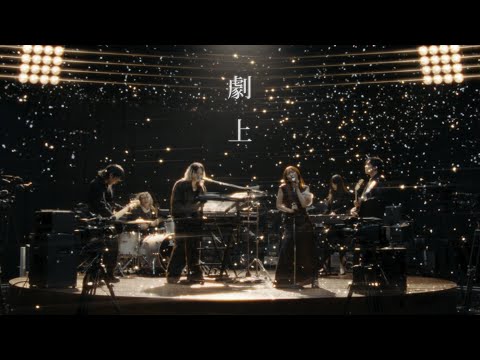
劇上 Gekijou
A learner edition with context, grammar notes, glosses, and complete line-by-line commentary.
- Artist
- YOASOBI
- Level
- JLPT N2-N1
- Source
- Quarto draft
Piece and context
Gekijou appears to sit closer to stage imagery, role-playing, ambition, and performance than the other two songs in the current library slice. Reporting around the release describes it as tied to a drama project associated with Koki Mitani and notes that YOASOBI worked from a script and biographical source material while also engaging with the idea that the world itself is a stage.
That makes Gekijou especially useful for learners who want to track theatrical framing in Japanese: roles, movement, display, self-presentation, and vocabulary that can sound both literal and metaphorical at once. It also marks a notable point in YOASOBI’s output because Ayase participates vocally alongside ikura.
Learner notes
Style and register
Gekijou leans into theatre language, slogans, and direct performance energy. Compared with Gunjou, it sounds more public, more declamatory, and sometimes more overtly rhetorical.
- repeated imperative-like openings such as 踊れ (odore)
- stage and role vocabulary used both literally and figuratively
- quoted speech that sounds frustrated and theatrical
- compressed metaphor where the world itself becomes a stage
Important grammar patterns
- 〜てらんない / やってらんない: colloquial “can’t put up with this”
- 〜そうだ (-sō da): seeming likely to…
- 〜ならば (-naraba): if it is the case that…
- 〜だとしたら (da to shitara): if it were the case that…
- 〜切る (-kiru): to carry through completely
- 〜まで (-made): until
Vocabulary and literary notes
- 野晒し (nozarashi): exposed to the elements; left out in the open
- 役回り (yakumawari): one’s role, part, assigned position
- 拍手喝采 (hakushu kassai): applause and cheers
- 喧騒 (kensō): tumult, noisy commotion
- 幕が上がる / 幕が降りる: the curtain rises / falls; theatrical but also metaphorical for life or action
Text
Opening
1
踊れ dance!
Odore dance!
dance-IMP dance
Dance, dance!
An immediate command. The borrowed English dance sharpens the pop-performance feel.
2
暗闇の中で
Kurayami no naka de
darkness GEN inside LOC
In the darkness.
A stage image, but also a wider metaphor for uncertainty.
3
踊れ dance!
Odore dance!
dance-IMP dance
Dance, dance!
The repetition makes it feel like a chant or stage cue.
4
野晒しの舞台で
Nozarashi no butai de
weather.exposed GEN stage LOC
On a stage exposed to the elements.
野晒し adds harshness: this is not a protected or comfortable performance space.
5
「やってらんないな」
Yatte rannai na
do-CVB endure-NEG COP.EXCL
“I can’t keep doing this.”
やってらんない is strongly colloquial, from やっていられない.
6
「冗談じゃないわ」
Joudan ja nai wa
joke COP NEG EXCL
“This is no joke.”
Quoted frustration makes the opening feel crowded with voices and roles.
7
叫び出してしまいそうな想いが
Sakebidashite shimai sou na omoi ga
shout-out do.finish-SEEM ATTR feeling NOM
These feelings are on the verge of bursting into a scream.
〜てしまいそう suggests something is on the verge of happening in an uncontrolled or unwanted way.
8
Verse 1
誰もがそうだ
Dare mo ga sou da
everyone NOM so COP
Everyone is like that.
Using 誰もが widens the claim from one speaker to people in general.
9
僕もそうだ
Boku mo sou da
I also so COP
I am too.
Plain and direct. The speaker joins the crowd rather than standing apart from it.
10
彷徨い歩けど 行き止まり
Samayoi arukedo ikidomari
wander walk-though dead.end
I wander on, but it is a dead end.
けど is clipped and literary-sounding here after the verb phrase.
11
この街は理想郷か
Kono machi wa risoukyou ka
this city TOP utopia Q
Is this city a utopia?
A high-register word like 理想郷 makes the question sound dramatic and ideological.
12
はたまた夢の墓場となるか
Hatamata yume no hakaba to naru ka
or.else dream GEN graveyard QUOT become Q
Or else will it become a graveyard of dreams?
はたまた sounds rhetorical and slightly elevated.
13
色めき立つ喧騒の
Iromekitatsu kensou no
stir.with.excitement tumult GEN
In the excited uproar...
This line pushes forward into the next one; it is descriptive buildup.
14
隙間に点るネオン灯
Sukima ni tomoru neon tou
gap DAT light.up-NPST neon-light
...neon lights glow in the gaps.
点る is a compact verb for a light coming on or glowing.
15
人知れず動き出す舞台があった
Hito shirezu ugokidasu butai ga atta
people know-NEG.CVB move-begin stage NOM exist-PST
There was a stage that began to move, unseen by others.
人知れず means “without people knowing; unnoticed”.
16
Chorus 1
まばらに人と人
Mabara ni hito to hito
sparsely ADV person and person
Here and there, scattered people...
A sparse crowd: the song keeps the theatre image, but the hall is not full.
17
閑散としたダンスホール
Kansan to shita dansu hooru
deserted ADV do-PST dance hall
...inside a nearly deserted dance hall.
閑散とした is stronger than merely “quiet”; it suggests emptiness and lack of energy.
18
静かにただ
Shizuka ni tada
quietly ADV merely
Quietly, simply...
Another suspended phrase, heightening stage tension.
19
主役を待つスポットライト
Shuyaku o matsu supotto raito
lead.role ACC await-NPST spotlight
...a spotlight waits for the lead role.
The spotlight is personified, which makes the stage feel alive before the action starts.
20
流れるミュージック
Nagareru myuujikku
flow-NPST music
Music begins to flow.
A simple scene-setting line that starts the transition from waiting to performance.
21
誰もが着込んだ不安ごと
Dare mo ga kikonda fuan goto
everyone NOM wear.heavily-PST anxiety including
Everyone’s anxieties, worn like layers of clothing and all...
着込む usually means bundling oneself up in clothes. Here anxiety is metaphorically worn.
22
脱ぎ去る夜
Nugisaru yoru
strip.off-and.leave night
...this is the night to strip them away.
A strong image of casting off fear before stepping into performance.
23
幕が上がる
Maku ga agaru
curtain NOM rise-NPST
The curtain rises.
Literal theatre language, but it also supports the broader use of stage vocabulary for life and role-playing.
24
踊る dance!
Odoru dance!
dance-NPST dance
Dance, dance!
The mode shifts from command (踊れ) to ongoing action (踊る), as if the performance has now fully begun.
25
暗闇の中で
Kurayami no naka de
darkness GEN inside LOC
In the darkness.
When this refrain returns, it comes after more explicit motion and stage language than before.
26
Verse 2
きらりゆらりと
Kirari yurari to
glint ADV sway ADV QUOT
Glinting, swaying...
Two mimetic adverbs together create shimmer and motion.
27
星も見えない夜に舞う
Hoshi mo mienai yoru ni mau
stars even visible-NEG night DAT dance-NPST
Dancing through a night where even the stars cannot be seen.
The night is visually blank, so the act of dancing becomes its own source of meaning.
28
そこに写し見えた影法師
Soko ni utsushi mieta kageboushi
there LOC reflect visible-PST silhouette
There, reflected into view, was a shadowy figure.
影法師 is a shadow or silhouette, often with a faintly poetic feel.
29
明日を探す僕らのシンボリズム
Ashita o sagasu bokura no shinborizumu
tomorrow ACC seek-NPST we GEN symbolism
The symbolism of us searching for tomorrow.
The borrowed term シンボリズム gives the line a self-consciously interpretive, theatrical feel.
30
踊る dance!
Odoru dance!
dance-NPST dance
Dance, dance!
The repeated imperative keeps pushing toward motion rather than pause or explanation.
31
肌身をあらわに
Hadami o arawa ni
body ACC exposed ADV
With the bare self laid open.
肌を晒す can be literal, but it also works as exposure language more broadly.
32
強かに舞う姿が美しい
Shitataka ni mau sugata ga utsukushii
tenaciously ADV dance-NPST figure NOM beautiful
The figure dancing so fiercely and tenaciously is beautiful.
強かに suggests toughness and resilience. It is stronger and more literary than a plain adverb like 強く.
33
やがてこの幕が降りた時
Yagate kono maku ga orita toki
eventually this curtain NOM fall-PST time
When at last this curtain falls...
This introduces one of the page’s recurring questions: what remains when performance language falls away?
34
僕らは何者へと帰るのか
Bokura wa nanimono e to kaeru no ka
we TOP what-being toward return-NPST NMLZ Q
What do we return to being?
A striking identity question: after the role ends, what are we?
35
Chorus 2 / Development
もしも世界が
Moshimo sekai ga
if world NOM
If the world...
A suspended hypothetical that sets up the stage metaphor directly.
36
舞台ならば
Butai naraba
stage if.so
...is a stage...
ならば feels more rhetorical and formal than a plain なら.
37
これも与えられた役回り?
Kore mo ataerareta yakumawari
this also give-PASS-PST role
...then is this too just a role assigned to me?
与えられた makes the role feel imposed from outside, not self-chosen.
38
たとえば 拍手喝采
Tatoeba hakushu kassai
for.example applause.cheers
Say, for example, applause and acclaim.
拍手喝采 is a set phrase for clapping, acclaim, and loud approval.
39
完成された喜劇に身を賭して
Kansei sareta kigeki ni mi o toshite
complete-PASS-PST comedy DAT body ACC stake-CVB
Wagering one’s whole self on a fully crafted comedy...
身を賭す is strong language: to stake one’s life or whole being on something.
40
指差され笑われる日々は
Yubisasa re warawareru hibi wa
point.at-PASS laugh.at-PASS day.day TOP
And those days of being pointed at and laughed at...
The passive forms make public ridicule feel relentless and structural.
41
悲劇なのか
Higeki na no ka
tragedy COP EXPL Q
...are they a tragedy?
This line uses theatrical genre language to ask a broader question, without clearly limiting the wording to an actual stage performance.
42
「このままでいいのか いけないのか」
Kono mama de ii no ka ikenai no ka
this state with good NMLZ Q bad NMLZ Q
“Is it okay to stay like this, or is it not?”
A quoted internal debate. このまま is a very useful expression meaning “as things are / like this”.
43
それも全ては自分次第みたいだ
Sore mo subete wa jibun shidai mitai da
that also all TOP self depending.on seem COP
It seems even all of that depends on oneself.
〜次第 means “depending on...”. It makes the outcome depend on what comes before it.
44
救いのない日々も憂いも
Sukui no nai hibi mo urei mo
salvation GEN not.exist day.day even sorrow even
Even the days without salvation, even the grief...
憂い is more literary than a plain “sadness”; it suggests sorrow, worry, or melancholy.
45
物語の一幕だとしたら
Monogatari no hitomaku da to shitara
story GEN one-act COP QUOT if.it.were
...if they are just one act in a larger story...
一幕 means one act of a play, tying the theatrical metaphor back into life narrative.
46
たとえ今が哀れでも無様でも
Tatoe ima ga aware demo buzama demo
even.if now NOM pitiful even clumsy even
Even if right now I am pitiful, even if I am ungainly...
無様 is harsh: awkward, pathetic, ungraceful in a public way.
47
Final Chorus / Outro
主役を演じ切る命であれ
Shuyaku o enjikiru inochi de are
lead.role ACC perform-completely life COP be.IMP
Let this life be one that carries the lead role through to the end.
演じ切る means to perform completely, to the finish. であれ has a forceful, almost literary imperative feel.
48
踊れ dance!
Odore dance!
dance-IMP dance
Dance, dance!
The imperative returns with renewed force after the reflective middle section.
49
今この劇上で
Ima kono gekijou de
now this stage LOC
Now, on this very stage.
今この has an emphatic narrowing force: right now, on this exact stage.
50
この身ひとつ
Kono mi hitotsu
this body one.only
With nothing but this body alone.
A compact statement of exposure and resolve: no mask, no extra protection, just the self.
51
明日も見えない夜に舞え
Ashita mo mienai yoru ni mae
tomorrow even visible-NEG night DAT dance-IMP
Dance in this night where even tomorrow cannot be seen.
The darkness now extends beyond stars to tomorrow itself: the future is obscured, but action is still demanded.
52
今は誰も見向きもしない
Ima wa dare mo mimuki mo shinai
now TOP anyone even glance even do-NEG
Right now, no one even looks this way.
見向きもしない means not even glancing toward something; total neglect.
53
そんな役回りでも知ったことか
Sonna yakumawari demo shitta koto ka
such role even known thing Q
And even if that is my role, so what?
知ったことか is dismissive and defiant: “what do I care?”
54
踊れ dance!
Odore dance!
dance-IMP dance
Dance, dance!
By this point the repeated wording sounds less like a fresh command and more like a repeated slogan.
55
野晒しの舞台で
Nozarashi no butai de
weather.exposed GEN stage LOC
On the stage exposed to the elements.
The harsh stage image returns and becomes a place of affirmation, not just hardship.
56
がむしゃらに生きる僕らは美しい
Gamushara ni ikiru bokura wa utsukushii
recklessly ADV live-NPST we TOP beautiful
We who live with such desperate abandon are beautiful.
がむしゃらに means recklessly, desperately, with total abandon.
57
いつかこの幕が降りるまで
Itsuka kono maku ga oriru made
someday this curtain NOM fall-NPST until
Until the day this curtain finally falls.
The wording places everything under a clear finite limit rather than leaving the scope open-ended.
58
この命を演じ続けるのさ
Kono inochi o enji tsuzukeru no sa
this life ACC perform continue-NPST EXPL EXCL
I will go on performing this life.
演じ続ける fuses theatre and existence completely: life itself is the role.
59
この命を見せつけてやるのさ
Kono inochi o misetsukete yaru no sa
this life ACC show.off-CVB do EXPL EXCL
I will force this life into view and show it to the world.
見せつける has an aggressive edge: to thrust something before others’ eyes.
60
今この劇上で
Ima kono gekijou de
now this stage LOC
Here and now, on this stage.
The phrase returns as a final anchoring point: this is where the life-role is being lived.
61
踊れ dance!
Odore dance!
dance-IMP dance
Dance, dance!
Ending on a command keeps the page from closing on reflection alone.
62
この幕が降りるまで
Kono maku ga oriru made
this curtain NOM fall-NPST until
Until this curtain falls.
A tight closing line: finite life, continuous performance, no retreat before the end.
About the glosses
The glosses are learner-oriented and compact rather than fully technical. The romaji line is segmented to help both pronunciation and reading of the grammar.
Abbreviations:
TOPtopicNOMsubjectACCobjectDATdativeGENgenitiveLOClocationNPSTnon-pastPSTpastNEGnegationATTRattributiveCVBconverbEXPLexplanatoryIMPimperative