Learner edition
お先に失礼します。 Osakini Shitsurei Shimasu
A full learner edition with context, grammar notes, and complete line-by-line analysis.
- Artist
- HANABIE.
- Level
- JLPT N3-N2
- Source
- Quarto draft
Piece and context
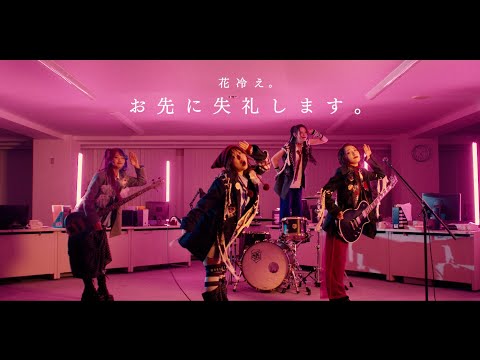
Osakini Shitsurei Shimasu takes the very ordinary Japanese phrase お先に失礼します and turns it into a loud exit line. In normal life the phrase is routine office politeness. Here it gets pulled into a much rougher setting of pressure, irritation, performance, and wanting out.
For learners, the song is especially interesting because it mixes workplace formula language with slang, sound-play, English hooks, and a lot of deliberate register clashes.
Learner notes
Style and register
Osakini Shitsurei Shimasu is built on register clash. The lyric jumps between polite formulas, slangy compression, English chorus lines, and comic exaggeration. The grammar itself is often not that hard; the harder part is hearing how tone changes the phrase.
- polite formulas used sarcastically
- frustrated spoken style
- slang and sound-play
- English refrains layered over Japanese social language
Important grammar patterns
- 未だ (imada): still…, not yet…, as in 未だ落とし穴分からない
- 〜なんて (nante): such a thing as…, often dismissive, as in 相対性理論なんて
- 〜過ぎる (-sugiru): too much, excessively…, as in 醍醐味過ぎてて
- 〜ます (-masu): polite verb ending, used here in a jarring playful way in 何でもするます
Vocabulary and reference notes
- お先に失礼します (osaki ni shitsurei shimasu): “excuse me for leaving before you,” a very common workplace phrase
- 過密スケジュール (kamitsu sukejuuru): overly packed schedule
- 探り合う (saguriau): to probe each other, test the waters
- 殺気 (sakki): murderous or hostile air; intense threat in the atmosphere
Text
Verse 1
1
過密スケジュール管理
Kamitsu sukejuuru kanri
overpacked schedule management
Overpacked schedule management.
A clipped noun phrase with no verb. It sounds administrative, which fits the overwork theme immediately.
2
唯一わくわく日曜日
Yuitsu wakuwaku nichiyoubi
only exciting Sunday
The one exciting Sunday.
唯一 means only or sole. It emphasizes scarcity.
3
遊びたいカマシタイ
Asobitai kamashitai
play.want go.hard.want
I want to go out, I want to go all in.
カマす is slangy and forceful: to go hard, pull something off loudly, or make a strong move.
4
未だ落とし穴分からない
Imada otoshiana wakaranai
still pitfalls understand-NEG
I still do not know where the pitfalls are.
未だ means still / not yet. 落とし穴 literally means pitfall or trap.
5
いつオッケー? 届くDM
Itsu okkee? Todoku diiemu
when okay arrive-NPST DM
When is it okay? A DM comes in.
DM makes the scene explicitly contemporary. The line is clipped enough to feel like message language.
6
It's OK! 努力無縁
It's OK! Doryoku muen
effort unrelated
It’s okay! Effort has nothing to do with it.
無縁 literally means having no connection to something. The line is very blunt.
7
Ah ラッキーハッピーSunday
Ah rakkii happii Sunday
lucky happy Sunday
Ah, lucky happy Sunday.
This line is bright on the surface, but it is still built from English cheer phrases rather than stable description.
8
探り合ってご相席どうも
Saguriatte go-aiseki doumo
probe.each.other-CVB shared.seating thanks
Feeling each other out, thanks for the shared table.
探り合う means feeling each other out or probing each other.
9
目と目合ってここからが勝負
Me to me atte koko kara ga shoubu
eyes and eyes meet-CVB here from NOM match
Eyes meet; from here on, it is a showdown.
勝負 means contest, match, or showdown. It makes the social situation sound competitive.
10
〖相対性理論なんて I don't know〗
Soutaisei riron nante I don't know
relativity theory such.as ENGLISH refrain
“Something like relativity theory? I don’t know.”
なんて is dismissive here: "something like relativity theory..."
11
立ち上がるワ
Tachiagaru wa
stand.up-NPST FP
I’m standing up.
A simple action line. Standing up becomes the signal that the speaker is done.
12
お先に失礼します
Osaki ni shitsurei shimasu
ahead DAT rudeness do.POL
Excuse me, I’ll be leaving first.
お先に失礼します is the standard polite phrase for leaving before others, especially in workplaces. The whole song depends on reusing that routine phrase in a different tone.
Chorus 1
13
Sorry, Sorry, I'm sorry, I know now
Sorry, Sorry, I'm sorry, I know now
ENGLISH refrain
Sorry, sorry, I’m sorry, I know now.
The English apology is stylized and chant-like rather than natural everyday speech.
14
Let's just run away
Let's just run away
ENGLISH refrain
Let’s just run away.
The chorus names escape directly instead of patience or negotiation.
15
Sorry, Sorry, I'm sorry, I know now
Sorry, Sorry, I'm sorry, I know now
ENGLISH refrain
Sorry, sorry, I’m sorry, I know now.
Repeating the same English line makes it feel more like a hook than a sincere apology.
16
Let's just run away
Let's just run away
ENGLISH refrain
Let’s just run away.
Again the answer offered is simply leaving.
Verse 2
17
ペコペコちゃん♪とする~ オトナって礼儀
Pekopeko-chan to suru~ otona tte reigi
bowing.repeatedly-diminutive QUOT do adult QUOT manners
Doing the little bow-bow routine, because adults call that manners.
ペコペコ evokes repeated bowing or submissive apologizing. The line is mocking.
18
ペコペコもっとする~ コドモって見る気?
Pekopeko motto suru~ kodomo tte miru ki?
bowing.repeatedly more do child QUOT see intention
If I bow even more, are you going to keep treating me like a child?
子どもって見る means to see or treat someone as a child.
19
ねえ、甘ったれてるよね まるでキャンディ↑
Nee, amattareteru yo ne marude kyandi
hey spoiled-PROG FP FP just.like candy
Hey, you’re acting spoiled, aren’t you, like candy.
甘ったれる means acting spoiled or dependent. The candy comparison keeps the wording bright and sarcastic.
20
ベンティな態度 パンチ出そうよ (Punch)
Benti na taido panchi dasou yo
venti ATTR attitude punch put.out-VOL FP
That oversized attitude makes me want to throw a punch. (Punch)
ベンティ borrows the coffee-size word to mean something absurdly oversized.
21
スリルが醍醐味過ぎてて なにより
Suriru ga daigomi sugitet e naniyori
thrill NOM real.pleasure exceed-CVB above.all
The thrill is too much the whole point, more than anything.
醍醐味 means the real pleasure or best part. 〜過ぎてて means "being too much..."
22
アンラッキー ハッキリ殺気 you there
Anrakkii hakkiri sakki you there
unlucky clearly hostile.air ENGLISH callout
Unlucky, and the killing intent is obvious, you there.
殺気 means an atmosphere of violent or hostile intent. It is much stronger than plain tension.
Verse 3
23
大解放だいっ!
Dai kaihou da i!
big release COP FP
A huge release!
大解放 means big release or liberation. The line is more exclamation than sentence.
24
だいたい 曖昧
Daitai aimai
mostly vague
Most of it is vague anyway.
曖昧 means vague or ambiguous. The short line sounds slogan-like.
25
代打 偉大 対 バイバーイ
Daida idai tai bai-bai
pinch.hitter great versus bye.bye
Substitute, greatness, versus bye-bye.
This line is mostly sound-play. The words are chosen as much for rhythm as for stable sentence meaning.
26
日々ノリ先乗り 先取り波乗りジャーニー
Hibi nori sakinori sakidori nori-nori jaanii
daily vibe jump.ahead grab.ahead ride.waves journey
Day by day, riding the vibe, getting ahead, surfing ahead, wave-riding journey.
Another line driven by sound and momentum more than by normal sentence structure.
27
ステップアップちゃう?
Suteppu appu chau?
step.up different.from?
Isn’t that a step up?
ちゃう? is a casual Kansai-flavored "isn't it?" or "won't it?"
28
ブラッシュアップしちゃう
Burasshu appu shichau
brush.up do-COMPL
I’ll end up brushing it up.
しちゃう is colloquial for してしまう. Here it sounds light and energetic, not regretful.
29
世界バックに 明快ラップを命から
Sekai bakku ni meikai rappu o inochi kara
world back at clear rap ACC life from
With the world as backdrop, from the core of my life, a clear rap.
A very compressed performance line. The phrasing is showy rather than conversational.
30
何でもするます♡
Nandemo suru masu
anything do.POL
I’ll do anything. ♡
Using polite ます in this odd shape is deliberate comic mismatch. It sounds mock-polite.
Verse 4
31
頭ぺこぺこ 笑顔が流儀
Atama pekopeko egao ga ryuugi
head bowing.repeatedly smile NOM style
Head bobbing in bows, smiles are the code of conduct.
流儀 means way of doing things, style, or code.
32
馴染めないない drinking party
Najimenai nai drinking party
fit.in-NEG-NEG drinking party
A drinking party I absolutely cannot fit into.
The repeated negative sound is expressive rather than formal written grammar. It emphasizes refusal to fit in.
33
〖特待生ビジョン 成り上がろうよ〗
Tokutaisei bijon nariagarou yo
special.student vision rise.up-VOL FP
“Scholarship-student vision: let’s rise to the top.”
Another slogan-like quoted line rather than ordinary speech.
34
立ち上がるワ
Tachiagaru wa
stand.up-NPST FP
I’m standing up.
The same action cue returns: standing up means exiting the whole situation.
35
お先に失礼します
Osaki ni shitsurei shimasu
ahead DAT rudeness do.POL
Excuse me, I’ll be leaving first.
By now the formula phrase has clearly been repurposed as an exit slogan.
Chorus 2
36
Sorry, Sorry, I'm sorry, I know now
Sorry, Sorry, I'm sorry, I know now
ENGLISH refrain
Sorry, sorry, I’m sorry, I know now.
The same English apology returns as a repeated hook.
37
Let's just run away
Let's just run away
ENGLISH refrain
Let’s just run away.
Again the chorus chooses leaving over adapting.
38
Sorry, Sorry, I'm sorry, I know now
Sorry, Sorry, I'm sorry, I know now
ENGLISH refrain
Sorry, sorry, I’m sorry, I know now.
At this point the repeated apology sounds more like a chant than actual remorse.
39
Let's just run away
Let's just run away
ENGLISH refrain
Let’s just run away.
The line keeps giving the same answer to the pressure built up earlier.
40
ペコペコちゃん♪とする~ オトナって礼儀
Pekopeko-chan to suru~ otona tte reigi
bowing.repeatedly-diminutive QUOT do adult QUOT manners
Doing the little bow-bow routine, because adults call that manners.
The refrain now folds the bowing-language directly into the chorus shape.
41
ペコペコもっとする~ コドモって見る気?
Pekopeko motto suru~ kodomo tte miru ki?
bowing.repeatedly more do child QUOT see intention
If I bow even more, are you going to keep treating me like a child?
The line returns to the same complaint about being treated as childish despite all the performed politeness.
Final Chorus
42
Sorry, Sorry, I'm sorry, I know now
Sorry, Sorry, I'm sorry, I know now
ENGLISH refrain
Sorry, sorry, I’m sorry, I know now.
The line is repeated again without trying to sound more sincere.
43
Let's just run away
Let's just run away
ENGLISH refrain
Let’s just run away.
The exit line stays unchanged right to the end.
44
Sorry, Sorry, I'm sorry, I know now
Sorry, Sorry, I'm sorry, I know now
ENGLISH refrain
Sorry, sorry, I’m sorry, I know now.
The repetition is deliberately excessive. That excess is part of the song's style.
45
Let's just run away
Let's just run away
ENGLISH refrain
Let’s just run away.
Repeated one more time, the line becomes almost pure chant.
46
ペコペコちゃん♪とする~ オトナって礼儀
Pekopeko-chan to suru~ otona tte reigi
bowing.repeatedly-diminutive QUOT do adult QUOT manners
Doing the little bow-bow routine, because adults call that manners.
The final return keeps the critique focused on ritualized bowing and "adult" behavior.
47
ペコペコもっとする~ コドモって見る気?
Pekopeko motto suru~ kodomo tte miru ki?
bowing.repeatedly more do child QUOT see intention
If I bow even more, are you going to keep treating me like a child?
The song ends on the same accusation instead of resolving it.
About the glosses
The glosses are compact and learner-oriented rather than fully technical. The romaji line is segmented for readability and the glosses focus on making structure easy to scan.
Abbreviations:
CVBconverbDATdativeNEGnegationNOMsubjectPOLpolite