Learner edition
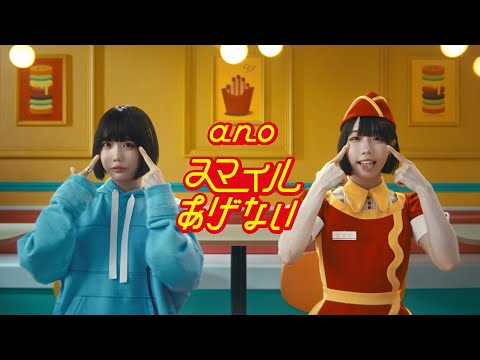
スマイルあげない Smile Agenai
A learner edition with context, grammar notes, and full line-by-line analysis.
- Artist
- ano
- Level
- JLPT N4-N2
- Source
- Quarto draft
Piece and context
Smile Agenai appears to build itself around customer-service language, public performance, and the idea of refusing a smile as a free social product. In context, that likely connects to the famous Japanese fast-food phrase スマイル0円 (“a smile costs 0 yen”), which makes the title feel less random and much more pointed.
For learners, the song looks especially promising because it seems to mix accessible Japanese with service-industry formulas, food and brand imagery, and emotionally loaded repetition. That combination can reveal a lot about emotional labor and commercial friendliness in modern Japanese culture.
The likely value of the page is therefore partly sociolinguistic. A smile here is not just an emotion or expression, but something requested, priced, branded, and expected. That turns a simple line like I won't give you a smile into a much richer statement about control over affect and self-presentation. This should become one of the clearer site examples of how a pop song can recycle commercial-script Japanese into a personal boundary statement.
Learner notes
Style and register
Smile Agenai appears to contrast commercial friendliness with personal resistance. That is useful for learners because it can show how Japanese formulas of politeness and service get bent into pop irony and self-protective attitude. The likely difficulty is less grammar than register recognition: understanding when a phrase sounds like customer-service speech, brand language, teasing attitude, or emotional refusal.
- cute phrasing with sharp attitude
- service-work and commercial language
- repetition and slogan-like hooks
- playful refusal and emotional edge
- likely useful for studying emotional labor language
- likely blend of advertising tone and personal pushback
- useful for distinguishing literal service phrases from ironic reuse
- likely strong contrast between cheerful surface and withheld affect
Important grammar patterns
- 〜ながら (-nagara): while doing…, as in テレビ見ながら食べた
- 〜たら (-tara): if / when…, as in 怒られたら
- 〜てくれたら (-te kuretara): if someone does … for me, as in 褒めてくれたら
- 〜なきゃ (-nakya): casual contracted “if there isn’t / must,” as in マニュアルがなきゃ
Vocabulary and literary notes
- スマイルあげない (sumairu agenai): literally “I won’t give you a smile”
- あげない (agenai): plain negative of “give”; emotionally simple grammar, but socially sharp in this context
- likely themes of emotional labor, performance, and refusal
- likely relation to the Japanese advertising/cultural phrase スマイル0円
- likely use of food and task vocabulary to frame identity and service
- likely useful for showing how commercial scripts get re-voiced in pop
Text
Opening block
1
お昼にテレビ見ながら食べた
Ohiru ni terebi minagara tabeta
noon DAT television watch-CVB eat-PST
At noon I ate while watching TV.
A mundane opening on purpose. The song starts in deadened everyday routine rather than in dramatic rebellion.
2
あのポテト
Ano poteto
that fries
Those fries.
Food branding and menu-language matter here; the line is flat on the surface but socially loaded.
3
この部屋から動けなくなって
Kono heya kara ugokenaku natte
this room from move-POT-NEG become-CVB
I ended up unable to move from this room.
〜なくなって marks a change of state: not just “I don't move,” but “I became unable to.”
4
現実逃避
Genjitsu touhi
reality escape
Escaping reality.
Blunt noun phrase, almost like a label pinned to the whole mood.
Food / service chant
5
バンズ / パティ / マスタード / ケチャップ / チーズ
Banzu / pati / masutaado / kechappu / chiizu
buns / patty / mustard / ketchup / cheese
Buns, patty, mustard, ketchup, cheese.
Menu assembly language becomes rhythm. This is one of the clearest commercial-script sections.
6
いってらっしゃい
Itterasshai
go.and.come.back
See you later.
A normal set phrase, but here it feels like scripted hospitality.
7
朝 / 早起きのごほうび / 片手に / いってらっしゃい
Asa / hayaoki no gohoubi / katate ni / itterasshai
morning / early.rising GEN reward / one.hand DAT / go.and.come.back
Morning, a reward for waking early in one hand, and “see you later.”
The compression makes this feel like ad copy or fragmentary service talk rather than normal narration.
Main hook
8
ギリギリ生きてる毎日
Girigiri ikiteru mainichi
barely live-PROG every.day
Every day I’m just barely getting by.
ギリギリ is casual but vivid: right at the edge.
9
怒られたら残機減る
Okoraretara zanki heru
get.scolded-if lives decrease
If I get scolded, my remaining lives go down.
Game language turns workplace or daily stress into a visible stat bar.
10
出来ること褒めてくれたら
Dekiru koto homete kuretara
can.do thing praise-CVB give-if
If someone praises what I can do...
〜てくれる keeps the emotional angle personal: it matters that someone does it for me.
11
1UP
Wan appu
one.up
1UP.
1UP continues the song's game-style way of talking about praise and emotional survival.
12
僕はニコっとスマイルあげないぜ
Boku wa niko tto sumairu agenai ze
I TOP smile.ADV smile give-NEG FP
I’m not gonna hand over a cheerful little smile.
ニコっと makes the smile tiny and performative; あげないぜ makes the refusal cocky rather than simply sad.
13
僕は僕のままのキャラクターで
Boku wa boku no mama no kyarakutaa de
I TOP I GEN state GEN character with
As the character I am, just as I am.
〜のまま is the key self-preservation phrase here: no forced persona swap.
14
世界をジュワっとあげちゃうぜ
Sekai o juwa tto agechau ze
world ACC sizzlingly raise-COMPL FP
I’ll make the whole world sizzle and rise.
ジュワっと sounds culinary and sensory at once, which fits the food-service imagery.
15
そこへ僕は塩を振る
Soko e boku wa shio o furu
there DAT I TOP salt ACC shake
And then I shake salt onto that.
The condiment wording keeps the food-service register active even while the speaker talks about self-expression.
16
僕はニコッとスマイルあげないぜ
Boku wa nikotto sumairu agenai ze
I TOP smile.ADV smile give-NEG FP
I’m not gonna give you a quick little smile.
The line returns as policy, not just emotion.
17
タスクこなすお茶の子さいさいさー
Tasuku konasu ocha no ko saisai saa
tasks handle tea GEN child easy.easy FP
Handling tasks is easy-peasy.
お茶の子さいさい is an idiom for something very easy; its cuteness contrasts with the sharper attitude elsewhere.
18
やっぱ足りてない協調性
Yappa taritenai kyouchousei
as.expected lack-PROG cooperation
Still, I guess I’m lacking in cooperativeness.
協調性 is a very social word, meaning the ability to cooperate smoothly with others. The line contrasts competence with social fit.
19
だけど僕は指揮を振る
Dakedo boku wa shiki o furu
but I TOP baton ACC wave
But I’ll conduct anyway.
A nice reversal: the supposedly uncooperative speaker still claims command.
Game / communication block
20
ルールも知らずに突っ込んでくプレイヤー
Ruuru mo shirazu ni tsukkondeku pureiyaa
rules even know-NEG CVB charge.into player
Players rush in without even knowing the rules.
The workplace/service world is recast as a game full of underprepared players.
21
死なないためのマニュアルがなきゃゲームオーバー
Shinanai tame no manyuaru ga nakya geemu oobaa
die-NEG purpose GEN manual NOM if.not game over
Without a manual for staying alive, it’s game over.
なきゃ is the compressed casual form that keeps the line fast and spoken.
22
人とコミュニケーションは難しい
Hito to komyunikeeshon wa muzukashii
people with communication TOP difficult
Communication with people is hard.
Very plain Japanese, which makes the admission land more directly.
23
だけど出来る気がするテレパシー
Dakedo dekiru ki ga suru terepashii
but can.do feeling NOM do telepathy
But telepathy somehow feels possible.
テレパシー works as a joke, but it also contrasts ideal communication with the difficulty of ordinary communication.
24
作業にハマれば意外と楽しい
Sagyou ni hamareba igai to tanoshii
tasks DAT get.into-if unexpectedly ADV fun
If I get absorbed in the work, it’s unexpectedly fun.
The song is more mixed than pure rebellion; there is real pleasure inside the routine too.
25
そして褒めてもらえたらちょっと嬉しい
Soshite homete moraetara chotto ureshii
and praise-CVB receive-if a.bit happy
And if I get praised, I’m a little happy.
A small but important softening line. The refusal of fake cheer does not erase the desire for recognition.
Chant tail
26
チキン / ナゲット / バーベキュー / マスタード / ハッピーハッピーなセットにはおたから
Chikin / nagetto / baabekyuu / masutaado / happii happii na setto ni wa otakara
chicken / nuggets / barbecue / mustard / happy happy ATTR set DAT TOP treasure
Chicken, nuggets, barbecue, mustard, and in the happy-happy set: treasure.
This ending chant pushes the commercial-childhood register to the front. It feels like menu language turned surreal and personal.