Learner edition
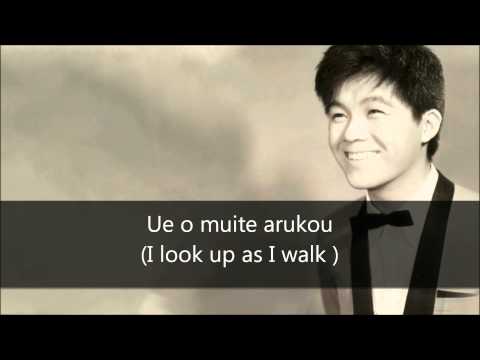
上を向いて歩こう Ue o Muite Arukou
A full learner edition with context, grammar notes, and complete line-by-line analysis.
- Artist
- Kyu Sakamoto
- Level
- JLPT N4-N3
- Source
- Quarto draft
Piece and context
Ue o Muite Arukou, known widely outside Japan as Sukiyaki, is one of the best-known Japanese songs internationally. The wording is very simple, but the song gets a lot of force from repeating small actions like looking up, walking, counting, and remembering.
For learners, it is especially useful because the grammar is accessible and the imagery is easy to follow. The emotional tone comes less from complicated language than from repeated basic words like 上, 涙, 星, and 一人ぼっち.
Learner notes
Style and register
Ue o Muite Arukou is plain, repetitive, and restrained. The grammar is accessible, and much of the meaning comes from repeated lines with small changes in season, sky imagery, and emotional emphasis.
- simple verbs repeated for effect
- refrain-based structure
- sky and direction vocabulary
- understated sadness
Important grammar patterns
- 〜ように (-you ni): so that…, as in 涙がこぼれないように
- 〜ながら (-nagara): while…, as in 泣きながら歩く
- 〜を向く (-o muku): to face / turn toward…, as in 上を向く
- 〜に (-ni): locative or metaphorical location, as in 雲の上に and 星のかげに
Vocabulary and reference notes
- こぼれる (koboreru): to spill, overflow, fall out
- にじむ (nijimu): to blur, run, become indistinct
- 一人ぽっち / ひとりぼっち (hitori-bocchi): all alone, by oneself
- かげ (kage): shadow, shade, hidden side
- 思い出す (omoidasu): to remember, recall suddenly
Text
Verse 1
1
上を向いて歩こう
Ue o muite arukou
up ACC facing walk-VOL
I’ll walk looking upward.
上を向く is literally "turn one's face upward." The line is physically simple, which is part of why it is memorable.
2
涙がこぼれないように
Namida ga koborenai you ni
tears NOM spill-NEG so.that
So that my tears won’t fall.
〜ように expresses purpose: "so that..." This line explains why he is looking upward.
3
思い出す春の日
Omoidasu haru no hi
recall-NPST spring GEN day
I remember a day in spring.
思い出す is "recall" or "remember suddenly." The song does not tell a detailed story; it gives remembered fragments.
4
一人ぼっちの夜
Hitori-bocchi no yoru
alone GEN night
A lonely night all by myself.
一人ぼっち is stronger than plain 一人 and usually sounds more emotionally lonely.
Verse 2
5
上を向いて歩こう
Ue o muite arukou
up ACC facing walk-VOL
I’ll walk looking upward.
Because the title line keeps returning, it starts to sound like self-instruction rather than a one-time statement.
6
にじんだ星をかぞえて
Nijinda hoshi o kazoete
blurred stars ACC counting-CVB
Counting the blurred stars...
にじむ is used for something blurring or running. With 星, it suggests the stars are being seen through wet eyes.
7
思い出す夏の日
Omoidasu natsu no hi
recall-NPST summer GEN day
I remember a day in summer.
The season changes from 春 to 夏, but the sentence shape stays the same. That repeated structure is part of the song's style.
8
一人ぼっちの夜
Hitori-bocchi no yoru
alone GEN night
A lonely night all by myself.
The loneliness line stays the same while the season changes. That contrast is simple but effective.
Chorus
9
幸せは雲の上に
Shiawase wa kumo no ue ni
happiness TOP clouds GEN above in
Happiness is above the clouds.
は gives the line a general, statement-like feel: "as for happiness..."
10
幸せは空の上に
Shiawase wa sora no ue ni
happiness TOP sky GEN above in
Happiness is above the sky.
Changing from 雲の上 to 空の上 lifts the image even further upward.
11
上を向いて歩こう
Ue o muite arukou
up ACC facing walk-VOL
I’ll walk looking upward.
Placed after the two 幸せ lines, the title line sounds like a response to that image.
12
涙がこぼれないように
Namida ga koborenai you ni
tears NOM spill-NEG so.that
So that my tears won’t fall.
The line repeats almost word for word. The song relies on that plain repetition rather than on new phrasing each time.
13
泣きながら歩く
Naki nagara aruku
cry-CVB while walk-NPST
I walk while crying.
〜ながら means "while doing." It makes the crying and walking happen at the same time.
14
一人ぼっちの夜
Hitori-bocchi no yoru
alone GEN night
A lonely night all by myself.
Placed after 泣きながら歩く, the line sounds heavier than it did earlier.
Bridge
15
思い出す秋の日
Omoidasu aki no hi
recall-NPST autumn GEN day
I remember a day in autumn.
Now the remembered season is 秋. The song uses season words in a very economical way.
16
一人ぼっちの夜
Hitori-bocchi no yoru
alone GEN night
A lonely night all by myself.
By this point the repeated line has a chant-like effect.
17
悲しみは星のかげに
Kanashimi wa hoshi no kage ni
sadness TOP stars GEN shadow in
Sadness is in the shadow of the stars.
かげ can mean shadow, shade, or the hidden side of something. It keeps the image indirect rather than bluntly saying "sadness is under the stars."
18
悲しみは月のかげに
Kanashimi wa tsuki no kage ni
sadness TOP moon GEN shadow in
Sadness is in the shadow of the moon.
The switch from 星 to 月 keeps the same sentence pattern while varying the sky image.
Final Chorus / Outro
19
上を向いて歩こう
Ue o muite arukou
up ACC facing walk-VOL
I’ll walk looking upward.
The line stays plain even at the end. There is no big change in wording to announce a resolution.
20
涙がこぼれないように
Namida ga koborenai you ni
tears NOM spill-NEG so.that
So that my tears won’t fall.
Again 〜ように gives the same purpose clause as at the beginning, which makes the ending echo the opening directly.
21
泣きながら歩く
Naki nagara aruku
cry-CVB while walk-NPST
I walk while crying.
This line openly states the crying that earlier lines tried to hold back. The grammar is very simple, but the contrast with こぼれないように matters.
22
一人ぼっちの夜
Hitori-bocchi no yoru
alone GEN night
A lonely night all by myself.
The song ends by repeating the same loneliness phrase rather than replacing it with a new conclusion.
About the glosses
The glosses are compact and learner-oriented rather than fully technical. The romaji line is segmented for readability and the glosses focus on making the structure easy to scan.
Abbreviations:
ACCobjectNOMsubjectGENgenitiveNEGnegationNPSTnon-pastPSTpastCVBconverbVOLvolitional